

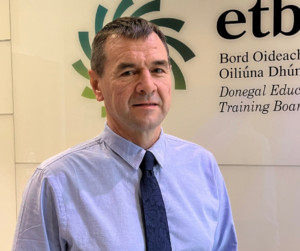
 In 2021, the Government published its first Public Sector Climate Action Mandate which highlights the main climate action objectives for public bodies. It envisages the public sector leading by example on climate action to reach the target of reducing Ireland’s greenhouse gas emissions by 51% by 2030 and becoming climate neutral no later than 2050. But what does this mean in practice for Donegal Education and Training Board as a public sector body? In this blog our Head of Innovation, Change Management and Capital Development, Sean Dunnion, tells us about what we have been doing this year.
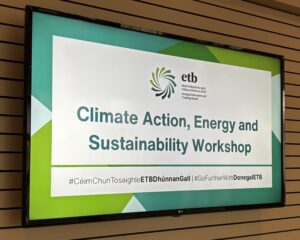 Earlier this year, on 11 February 2026, more than fifty colleagues from across Donegal Education and Training Board (ETB) came together for a Climate Action, Energy and Sustainability Workshop focused on electricity and oil usage. The aim was simple: share what is working, identify challenges, and agree practical actions that can be implemented consistently across our estate.
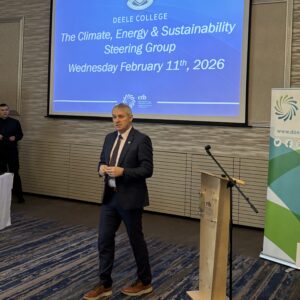
The half-day workshop combined short presentations with team discussions and highlighted the progress already being made. Participants noted increased monitoring of energy use, greater awareness of wastage, and a growing willingness to engage with climate action. Investment in renewable and energy-efficient technologies, including solar panels and sensor lighting, was also recognised, alongside smaller initiatives such as “Friday Switch Off”. Colleagues highlighted the value of working groups and the potential for greater student involvement in sustainability activities.
The discussions also identified a number of challenges that continue to affect energy performance. These include the age and condition of many buildings, heat loss through older infrastructure, limited awareness of conservation behaviours, and the need to sustain positive behaviour change over time. Participants also pointed to operational issues such as limited zoning, outdated heating systems, and the need for greater confidence in understanding energy data and utility bills.
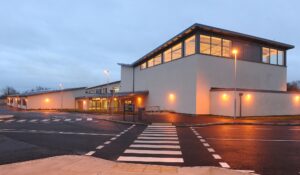
Alongside these discussions, 2026 has seen significant progress in capital investment projects designed to improve the performance of buildings across Donegal ETB’s estate. Climate Action Summer Works Schemes have been completed at Deele College and Finn Valley College, with works continuing at Abbey Vocational School. Energy improvement projects have also been delivered or are nearing completion across several Further Education and Training (FET) locations, including Letterkenny Training Centre, Gaoth Dobhair Training Centre, Gartan Outdoor Education and Training Centre, Finn Valley FET Centre and Donegal Town FET Centre at Drumcliff.
To support future planning, Donegal ETB has partnered with the North West Energy Agency, which has completed thirteen Investment Grade Energy Audits across the estate. These audits will help shape the next pipeline of projects and funding applications for 2027.
A key message from the workshop was that meaningful progress does not depend solely on major capital investment. Participants identified a number of immediate, low-cost actions that can reduce energy consumption and improve performance. These actions form the basis of Donegal ETB’s Winter 2026 Energy Campaign being launched later this month, aiming to encourage staff and students to play their part by reducing heat loss through closing windows and doors, promoting practical energy-saving behaviours, making energy management a regular agenda item, introducing simple visual prompts such as traffic-light systems for switches, setting heating controls more consistently, and ensuring routine servicing of heating systems.
We will also participate in Climate Action Week activities, from 12-18 October, such as Donegal County Council’s Climate Action Expo, on 12 October, to highlight our work to the wider public.
These actions help build a culture where energy management becomes part of everyday practice and where responsibility for sustainability is shared across the organisation.
–
View the February workshop through this Facebook reel.